



Community-based conservation
In Sáng Nhè commune, the Phù Lá community accounts for a small population, living interspersed with the Hmong, Thai, Dao ethnic groups... Therefore, for many years, the traditional cultural features of the Phù Lá people have been strongly dominated. For example, most costumes used by people in daily life have been mixed; rituals in weddings and funerals are no longer complete; traditional New Year, forest worship ceremonies, and field-descending ceremonies only exist in the memories of the elderly.
According to Trần Ngọc Duyên, Vice Chairman of Sáng Nhè commune, the Village Sweeping Ceremony is one of the most unique traditional spiritual rituals of the Phù Lá community. This is the “cord” connecting humans with nature, with ancestors; a prayer for peace for the village. However, changes and development in social life over many years have caused this ritual to be almost no longer practiced.
.jpg)
“Many Phù Lá youths do not know about the Village Sweeping Ceremony, nor are they keen on traditional culture, while the generation knowledgeable about Phù Lá culture is gradually dwindling. Restoring the ritual poses an urgent requirement not only for the Phù Lá community but also for local authorities and relevant levels and sectors. Thereby aiming to restore pride and arouse consciousness of keeping culture like keeping one’s own house for the Phù Lá people,” Duyên said.
A notable highlight in “reviving” Phù Lá traditional culture implemented recently is the program supporting research, restoration, preservation, and promotion of the intangible culture of the Village Sweeping Ceremony, implemented by the Department of Ethnic Culture of Vietnam in coordination with the Department of Culture, Sports and Tourism of Điện Biên and the Sáng Nhè commune authorities.
The training class with the participation of 70 artisans and students from 3 villages: Kép, Túc, and Khua Trá showed the conservation direction of “handing back to the community itself.” Experts do not do it for them but guide how to keep traditional elements intact when restoring so that culture lives by the people’s own lives, not by display in museums.
The community-based conservation model is clearly demonstrated in Nậm Kè commune, with the Cockscomb Flower Festival of the Cống people. This is one of the characteristic traditional rituals of the Cống people, which was at risk of being lost many years ago. With the attention of levels and subject sectors, the ritual was successfully restored and maintained annually at the beginning of the 9th lunar month. Currently, the ritual has become an indispensable spiritual cultural rendezvous for the Cống community in Nậm Kè.
Hù Văn Thịt, Nậm Kè village, is a Cống artisan and also the main shaman performing rituals in the ceremonial part of the Cockscomb Flower Festival. Therefore, witnessing this ritual revived and developed along with community life, Thịt is more excited than anyone else.
He shared: “With the attention of all levels, each of us Cống people is also self-aware of our responsibility in preserving and promoting traditional ethnic cultural values, including the Cockscomb Flower Festival. This is an opportunity to honor the identity of the Cống ethnic group, and at the same time a motivation for people to be more attached, continue, and spread the culture of their ancestors.”
.jpg)
Bringing traditional rituals to “integrate”
If the Village Sweeping Ceremony of the Phù Lá people emphasizes the spiritual element connecting the community, the Cockscomb Flower Festival of the Cống people carries many nuances of folk performance art. Reality shows that whatever the ritual, there is a common point: if well transmitted and promoted, it will contribute to promoting local socio-economic development in a unique, identity-rich direction. Looking at the Cống and Phù Lá communities, it can be seen that cultural preservation is not just “keeping the status quo.” It is a process of respecting traditional values but adapting to the trends of the times, creating mechanisms for people to master their heritage.
For many years, the province and the culture sector have taken specific steps, such as: Inventorying, creating scientific dossiers, opening teaching classes, restoring festivals in parallel with local cultural education, honoring artisans, and encouraging community participation. More importantly, the province has shifted from the mindset of “bringing culture to the people” to “letting people transmit their own culture.”
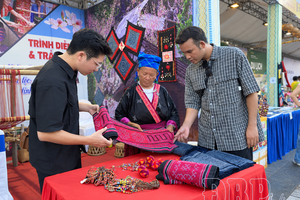
Over the past 5 years, many typical traditional rituals of ethnic communities have been preserved and restored, such as: Rainy Season New Year Ceremony (Hà Nhì ethnic group), Seed Sowing Ceremony (Khơ Mú), New Rice Celebration Ceremony (Cống), Water Splashing New Year (Lao), Nào Pê Chầu New Year (Hmong), Fire Jumping Ceremony (Dao), Ancestor Worship Ceremony (Thai), Child Praying Ritual (White Thai), Xên Village Festival, Rain Praying Festival...
Traditional rituals are not only spiritual activities but also “living museums” preserving customs, costumes, cuisine, crafts, farming knowledge, and life concepts of indigenous ethnic communities. With over 20,000 cultural artifacts being kept at museums and relic management sites in the area, along with a rich treasure of rituals and customs of 19 ethnic groups, Điện Biên is step by step transforming heritage into endogenous strength nurturing regional cultural identity.
.jpg)
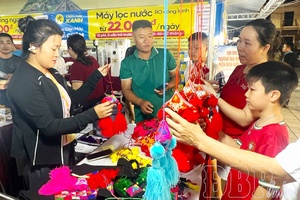
However, to accompany development, traditional rituals need to integrate. Linking conservation with tourism is becoming a suitable direction implemented by the province in recent years, aiming for the goal that culture is both preserved and creates motivation for economic development. Accordingly, unique festivals such as: Xên Village Festival, Thành Bản Phủ Festival, Lao Water Splashing Festival, Bauhinia Flower Festival art program, Northwest Essence Festival - Điện Biên in 2025 have gone beyond community activities to become attractive cultural tourism products.
Each festival season recreates the beauty of beliefs and customs of the people, creating a characteristic experience space, attracting tourists to explore the land and local people. Synchronously implemented promotion work has contributed to bringing the image of Điện Biên closer to the public inside and outside the country. Statistics in the 2021 - 2025 period show that the locality attracted over 2.7 million visitors to visit and experience, opening up many new opportunities for cultural heritage to become a resource for sustainable development.
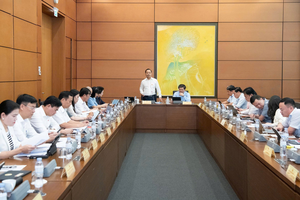
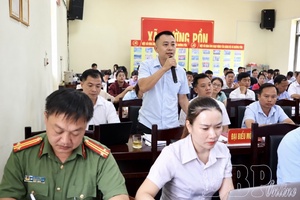
However, the risk of traditional rituals being lost is strong, especially in small population communities deeply culturally intersected and impacted by commercialization. In the context that the province strives towards tourism development associated with indigenous culture, preserving traditional rituals has even more strategic significance. Because without identity, cultural tourism remains only “performance for guests to watch.” Therefore, cultural preservation is not only the task of the Culture sector or a few minority communities but becomes a long-term socio-political responsibility, placed within the provincial development strategy. Especially, the implementation of administrative unit arrangement and switching to the 2-level model poses new requirements, demanding higher responsibility from the commune level in being close to the people, close to the grassroots to promote proactiveness and closeness, considering culture as a development foundation.
Hà Linh
.jpg)
.jpg)
.jpg)
.jpg)
.jpg)
.jpg)
.jpg)
.jpg)
.jpg)
.jpg)
You have 500/500 characters left
Please enter 5 or more characters!!!